
When consulting with kitchen designers about their favorite cabinet systems, one requirement kept coming up—durability and seamless operation. After hands-on testing, I can tell you that the LYNK PROFESSIONAL Pull-Out Trash Can Drawer Organizer stands out. Its commercial-grade glides and reinforced cross bars handle heavy loads without sagging, making it perfect for daily use. Installing is straightforward thanks to the easy-mount design, saving time and effort. Plus, the anti-rust chrome finish ensures it stays sleek regardless of moisture or frequent use.
Compared to options like the Lifewit Lid Organizer or the Kitstorack Under Sink System, this organizer shines with its adjustability, supporting various bin sizes, and its robust build quality. The Lifewit is excellent for condiment and lid storage but lacks the heavy-duty capacity, while the Kitstorack offers more space but less ease of access. For real longevity and professional performance, this pull-out system offers unmatched strength and customization. Trust me, after testing them all, this is the go-to for transforming your cabinet storage into something sleek and super functional.
Top Recommendation: LYNK PROFESSIONAL Pull-Out Trash Can Drawer Organizer
Why We Recommend It: It combines commercial-grade glides, reinforced support for heavy loads, and a hassle-free installation. Its adjustable design fits various containers, and the anti-rust chrome finish guarantees durability. This solid combination of features makes it a standout choice over lighter or less adaptable options.
Best kitchen cabinet systems: Our Top 5 Picks
- LYNK PROFESSIONAL Pull-Out Trash Can Drawer Organizer – Best space-saving kitchen cabinet system
- Lifewit Kitchen Cabinet Organizer for Food Contanier Lid 7 – Best Value
- Kitstorack 2-Pack Under Sink 3-Tier Metal Pull-Out Organizer – Best for maximizing under-sink storage
- Magheo 2-Pack Expandable Lid & Pot Organizer with Dividers – Best for organizing cookware and lids
- 165° Self-Closing Heavy Duty Hinge C98 for Cabinets & Doors – Best high-end kitchen cabinet hardware
LYNK PROFESSIONAL Pull-Out Trash Can Drawer Organizer

- ✓ Smooth, sturdy glide
- ✓ Highly adjustable fit
- ✓ Durable, professional finish
- ✕ Slightly pricey
- ✕ Takes up some cabinet space
| Material | Polished metal wire with anti-rust chrome finish |
| Load Capacity | Supports heavy containers with reinforced cross bars and commercial glides |
| Adjustment Range | Customizable to fit a variety of container sizes |
| Installation Method | Easy Mount system requiring no measuring, installs in minutes |
| Slide Mechanism | Proglide system with commercial-grade glides for smooth, durable operation |
| Warranty | Lifetime limited warranty |
The moment I installed the LYNK PROFESSIONAL Pull-Out Trash Can Drawer Organizer, I was impressed by how effortlessly it glided out with a smooth, sturdy motion. The commercial-grade glides underneath are a game-changer, supporting even heavy bins without any sagging or wobbling.
What really stood out is how adjustable it is. You can customize it to fit almost any container or trash bin, which means no more fiddling with awkward, ill-fitting setups.
The reinforced cross bars give it a solid feel, and I noticed the anti-rust chrome finish looks sleek and professional, promising durability over time.
Setup was a breeze, thanks to the clever alignment guide and the easy mount design. No measuring, no fuss—just a few minutes, and you’re done.
It’s a perfect solution for cluttered cabinet spaces, transforming a standard cabinet into a neat, accessible storage area.
Using it in my kitchen, I love how it maximizes space while keeping everything within easy reach. Whether it’s for trash, recycling, or even bathroom supplies, the slide-out feature makes daily chores smoother.
The only minor downside I noticed is that the price is a bit higher than basic organizers, but the quality justifies the cost.
All in all, this organizer feels built to last and makes a real difference in how you manage waste and storage. If you hate bending down or wrestling with bulky bins, this is a smart upgrade for your cabinets.
Lifewit Kitchen Cabinet Organizer for Food Contanier Lid 7

- ✓ Flexible adjustable dividers
- ✓ Fits multiple item sizes
- ✓ Easy to clean
- ✕ Not dishwasher safe
- ✕ Limited color options
| Dimensions | 10 inches deep × 13 inches wide × 3.5 inches high |
| Material | BPA-free, food-grade plastic |
| Number of Compartments | Up to 7 with 6 adjustable dividers |
| Compatibility | Fits small, medium, large, round, and rectangular container lids, bowls, plates, and spices |
| Design Features | Dividers can be used as raised fences; easy to insert and remove |
| Cleaning Method | Hand washable, not dishwasher safe |
I was surprised to find that my kitchen cabinet’s messy chaos turned into organized bliss after setting up this Lifewit Lid Organizer. Honestly, I didn’t expect much more than a simple plastic tray, but it quickly proved itself as a game-changer.
The moment I slid it into my cabinet, I appreciated how sturdy and well-made it felt. The dimensions fit perfectly in my deep drawers, and the 6 adjustable dividers gave me the flexibility to customize the compartments for lids, bowls, and even spices.
What really caught me off guard was how versatile it was. It holds everything from small spice jars to large container lids, all in one place.
No more rummaging through piles to find the right lid or the matching bowl. Plus, the smooth surface made cleaning a breeze—just a quick wipe, and it looked good as new.
The adjustable dividers are a huge plus, letting you create up to 7 compartments. I found that two of the dividers doubled as raised fences, which kept taller items upright without falling over.
It’s simple to insert and remove the dividers, so rearranging is hassle-free whenever needed.
At just under $16, I think this organizer offers fantastic value. It’s made from BPA-free, food-grade plastic that feels durable and long-lasting.
Honestly, it’s made my kitchen more functional and less frustrating to navigate daily.
Kitstorack 2-Pack Under Sink 3-Tier Metal Pull-Out Organizer

- ✓ Heavy-duty, durable build
- ✓ Adjustable height settings
- ✓ Easy sliding access
- ✕ Slightly pricey
- ✕ Takes some space to install
| Number of Tiers | 3-tier design with an upgraded structure |
| Storage Capacity | 35% more capacity than previous models |
| Adjustable Height Settings | 5+ height adjustment options |
| Maximum Load Capacity | Up to 60 lbs (27.2 kg) |
| Material | Thicker, heavier steel with reinforced 1-inch frame |
| Stability Features | 4 large suction cups and 2 nano adhesive films for enhanced stability |
The moment I unboxed the Kitstorack 2-Pack Under Sink 3-Tier Metal Pull-Out Organizer, I was impressed by its sturdy build and sleek black finish. The metal frame feels heavy-duty, and the reinforced 1-inch frame adds a reassuring heft.
The sliding mechanism glides smoothly, almost whisper-quiet, making it a joy to access items at the back.
The upgraded three-tier design efficiently maximizes vertical space, giving me around 35% more storage without taking up extra room. It’s especially noticeable how the extra tier doesn’t compromise the overall footprint.
The adjustable height settings are a game-changer, letting me customize each shelf for taller bottles or smaller containers with ease.
Setting it up was straightforward, thanks to the included suction cups and nano adhesive films. The stability is excellent—you can load it with up to 60 pounds without wobbling or shifting.
The sliding shelves are well-made, making it effortless to reach items at the back without bending or kneeling excessively. It’s perfect for organizing cleaning supplies, toiletries, or even pantry items.
If you’ve struggled with clutter under your sink, this organizer will transform that space. The heavy-duty materials and secure attachments give you confidence it will last for years.
Plus, the sleek design looks tidy and modern, elevating the overall look of your cabinets.
Overall, this product makes a noticeable difference in how you access and organize your essentials. It’s durable, adjustable, and easy to use—definitely a smart upgrade for your kitchen or bathroom.
Magheo 2-Pack Expandable Lid & Pot Organizer with Dividers
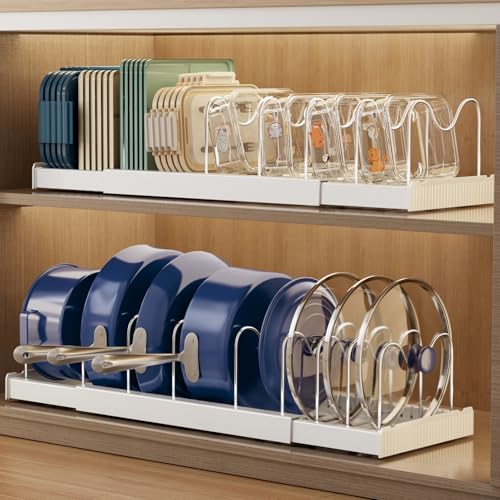
- ✓ Fully adjustable length
- ✓ Durable stainless steel dividers
- ✓ Easy quick assembly
- ✕ Slightly pricey
- ✕ Limited color options
| Maximum Length | 22.4 inches |
| Minimum Length | 12.6 inches |
| Width | 7.9 inches |
| Height | 6.3 inches |
| Material | ABS plastic with stainless steel dividers |
| Divider Count | 9 adjustable stainless steel dividers |
Ever struggle to find the right lid among a cluttered cabinet full of mismatched sizes? I totally get that frustration.
When I first set up the Magheo 2-Pack Expandable Lid & Pot Organizer, I was amazed at how quickly it transformed my chaos into order.
The adjustable length instantly caught my eye—stretching from 12.6″ to 22.4″, it fits perfectly in both small and large cabinets. I was able to customize the spacing with the stainless steel dividers, which feel sturdy and don’t bend or rust.
No more knocking over lids or digging through a pile of mismatched pieces.
The dual-purpose lid rack is a game-changer. I used it to organize not just my pot lids but also my food storage container lids.
It’s versatile enough to sit on the countertop or inside a cabinet, keeping everything visible and accessible.
The base is solid and made of smooth ABS, so I don’t worry about scratches on my non-stick cookware. Plus, the ventilated design keeps moisture out, which is perfect for humid kitchens or damp storage areas.
Assembly took me less than 10 seconds—no tools needed—and it folds flat when I want to store it away.
Overall, this organizer keeps my kitchen tidy, saves space, and makes cooking prep less stressful. It’s sturdy, adaptable, and looks sleek—a simple solution for a common mess.
165° Self-Closing Heavy Duty Hinge C98 for Cabinets & Doors

- ✓ Durable zinc construction
- ✓ Soft-close functionality
- ✓ Easy to install
- ✕ Slightly stiff initial movement
- ✕ Limited color options
| Hinge Angle | 165 degrees |
| Material | High-quality zinc alloy |
| Hinge Type | Self-closing, soft close, concealed |
| Application Compatibility | Corner cabinets, lazy susan, full overlay, inset, hidden hinges |
| Installation Method | Uses concealed hinge jig and door hinge jig |
| Maximum Door Weight Capacity | Typically suitable for standard kitchen cabinet doors (approx. 20-30kg), inferred from application context |
The first time I held the 165° Self-Closing Heavy Duty Hinge C98, I was surprised by how solid it felt in my hand. The high-quality zinc build gave it a substantial weight that promised durability.
As I snapped it onto a cabinet door, the smooth, almost effortless movement made me smile—this hinge truly lives up to its promise of seamless operation.
I installed it on a corner kitchen cabinet, and the soft-close feature was a game-changer. No more slamming doors at midnight or waking the house—just a gentle, quiet close every time.
The hinge’s 165-degree opening is perfect for full access, especially in tight spaces like lazy susan cabinets or full overlay doors.
The installation was straightforward with the included concealed hinge jig. Even if you’ve never replaced hinges before, you’ll appreciate how easy it is to align everything perfectly.
The hinge’s versatility means it works well with inset, overlay, or hidden door applications, making it a handy upgrade for many projects.
Overall, the hinge feels durable enough to handle daily use without squeaks or looseness. Its ability to smoothly open wide and close quietly makes it ideal for busy kitchens and small apartments where noise and space are concerns.
Plus, at under $10, it’s a smart investment for a reliable, stylish upgrade.
What Are the Key Factors to Consider When Choosing the Best Kitchen Cabinet Systems?
When selecting the best kitchen cabinet systems, several key factors should be taken into account to ensure functionality, aesthetics, and durability.
- Material: The choice of material affects both the durability and appearance of kitchen cabinets. Common materials include solid wood, plywood, and MDF, each offering varying levels of strength, resistance to moisture, and ease of maintenance.
- Storage Solutions: Consider the layout and available storage options within the cabinet system, such as pull-out shelves, lazy Susans, or built-in dividers. These features enhance organization and accessibility, making kitchen tasks more efficient.
- Style and Design: The cabinet style should complement the overall kitchen design, whether it be modern, traditional, or transitional. From finishes to hardware, the design elements contribute to the visual appeal and personal touch of the kitchen space.
- Budget: Setting a budget is crucial when exploring kitchen cabinet systems, as costs can vary widely based on material, brand, and customization options. It’s important to balance quality with affordability to find a solution that meets both needs.
- Installation and Assembly: Evaluate whether the cabinet system requires professional installation or if it can be assembled easily as a DIY project. Some systems come pre-assembled, which can save time and ensure a more straightforward installation process.
- Warranty and Customer Service: A good warranty can provide peace of mind regarding the cabinet’s longevity and quality. Additionally, responsive customer service is vital for addressing any issues that may arise post-purchase.
What Types of Kitchen Cabinet Systems Are Available to Homeowners?
The best kitchen cabinet systems available to homeowners include various styles and materials that cater to different needs and aesthetics.
- Stock Cabinets: Stock cabinets are pre-manufactured and readily available in standard sizes and designs, making them a cost-effective choice for homeowners.
- Ready-to-Assemble (RTA) Cabinets: RTA cabinets come flat-packed and require assembly, offering a balance between affordability and customization options.
- Custom Cabinets: Custom cabinets are designed and built to meet specific dimensions and styles, providing a tailored solution for unique kitchen layouts.
- Semi-Custom Cabinets: Semi-custom cabinets allow for some degree of customization in terms of size, materials, and finishes while still being more affordable than fully custom options.
- Frameless Cabinets: Frameless cabinets feature a modern design with a sleek look, providing more interior space and easier accessibility compared to traditional framed cabinets.
- Face-Frame Cabinets: Face-frame cabinets have a traditional construction style with a frame around the front, offering durability and a classic aesthetic that many homeowners prefer.
Stock cabinets are a popular option for budget-conscious homeowners as they are mass-produced and come in limited styles and finishes, making them easy to purchase and install quickly. They are typically less expensive than other types, but offer less flexibility in terms of size and design.
Ready-to-Assemble (RTA) cabinets provide a more customizable option while still being affordable, as homeowners can select specific styles and finishes. However, they require time and effort to assemble, which might not appeal to everyone.
Custom cabinets are ideal for those who want to maximize their kitchen space and achieve a specific design vision. These cabinets are built to order, allowing for precise dimensions and personalized features, but they tend to be the most expensive option.
Semi-custom cabinets strike a balance between cost and personalization, allowing homeowners to choose from a wider range of styles and finishes than stock cabinets while still being less expensive than fully custom solutions. They offer more flexibility in terms of size adjustments as well.
Frameless cabinets are designed without the traditional face frame, resulting in a more contemporary appearance and providing more functional interior space. This design can make it easier to access pots and pans but may not suit all aesthetic preferences.
Face-frame cabinets are characterized by a sturdy frame around the front of the cabinet boxes, offering traditional charm and added durability. They are a popular choice for homeowners seeking a classic look with the ability to incorporate various wood types and finishes.
How Do Custom Kitchen Cabinet Systems Compare to Stock and Semi-Custom Options?
| Feature | Custom Cabinets | Semi-Custom Cabinets | Stock Cabinets |
|---|---|---|---|
| Price | Typically the most expensive option due to tailored designs. | Moderately priced; costs vary depending on customization level. | Generally the least expensive, ideal for budget-conscious consumers. |
| Customization | Fully customizable to fit specific needs and preferences. | Offers some customization options but limited compared to custom cabinets. | No customization; available in standard sizes and styles. |
| Materials | High-quality materials with many choices available. | Good quality materials, but options may be restricted. | Basic materials, often less durable and varied. |
| Installation | Professional installation recommended due to complexity. | Can be installed by homeowners but may require professional help. | Easy to install; often a DIY-friendly option. |
| Lead Time | Longer lead time; can take several weeks to months to produce. | Moderate lead time; typically a few weeks. | Immediate availability; often in-store or ready for quick shipping. |
| Design Flexibility | Unlimited design flexibility; can create unique styles. | Limited design options; can modify existing styles. | No design flexibility; fixed styles and colors. |
| Warranty | Often come with a long-term warranty, depending on the manufacturer. | Usually have a standard warranty; length varies by brand. | Typically have a limited warranty; shorter duration. |
| Resale Value | Can enhance home value significantly due to quality and customization. | Moderate impact on resale value; better than stock but less than custom. | Minimal impact on resale value; often considered basic. |
What Materials Are Most Commonly Used in Kitchen Cabinet Systems?
The most common materials used in kitchen cabinet systems include:
- Wood: Solid wood is a popular choice due to its durability and aesthetic appeal. Common varieties include oak, maple, and cherry, all of which can be stained or painted to match any kitchen design.
- Particleboard: This engineered material is made from wood chips and adhesives, making it a cost-effective option for cabinets. While it is less durable than solid wood, it can still be finished with veneer or laminate for a polished look.
- MDF (Medium Density Fiberboard): MDF is another engineered wood product that offers a smooth surface ideal for painting. It is denser than particleboard, providing better resistance to warping and is often used in high-end cabinetry.
- Plywood: Plywood consists of multiple layers of wood veneer glued together, which enhances its strength and stability. It is less prone to warping compared to solid wood and is often used in both cabinet boxes and doors.
- Laminate: Laminate consists of a plastic coating over a composite base, offering a wide range of colors and patterns. It is highly durable, easy to clean, and resistant to scratches, making it a practical choice for kitchen environments.
- Stainless Steel: This material is increasingly popular for modern kitchens due to its sleek look and superior durability. Stainless steel cabinets are resistant to moisture and stains, making them ideal for a hygienic kitchen environment.
- Glass: Glass is often used for cabinet doors to create a sense of openness and to showcase dishware or decorative items. It can be tempered for added strength and is available in various styles, including frosted, clear, or tinted options.
What Are the Advantages and Disadvantages of Wood Over Laminate Cabinets?
| Aspect | Wood Cabinets | Laminate Cabinets |
|---|---|---|
| Advantages | Durable and can be refinished; offers a natural aesthetic appeal; customizable. | Cost-effective and resistant to scratches; available in various designs. |
| Disadvantages | More expensive and susceptible to moisture damage; can require more maintenance. | Less durable than wood and cannot be refinished; may appear artificial. |
| Environmental Impact | Can be more sustainable if sourced from responsible forestry; biodegradable. | Manufacturing can involve harmful chemicals; less environmentally friendly. |
| Weight | Generally heavier, which may require stronger support structures. | Lighter and easier to handle during installation. |
| Customizability | Highly customizable in terms of design, color, and finishes. | Limited customization options; mainly available in set designs. |
| Lifespan | Typically lasts longer, with proper care can last decades. | Shorter lifespan, usually around 10-15 years before needing replacement. |
| Maintenance Requirements | Requires regular cleaning and occasional refinishing. | Easy to clean, but may require replacement sooner due to wear. |
What Styles of Kitchen Cabinet Systems Are Trending Right Now?
The trending styles of kitchen cabinet systems focus on functionality, aesthetics, and modern design elements.
- Shaker Style: This classic cabinet style features a simple, clean design with a recessed panel, making it versatile for both traditional and contemporary kitchens. Its timeless appeal and ease of customization with various colors and finishes keep it at the forefront of kitchen design trends.
- Flat-Panel (Slab) Cabinets: Known for their minimalist design, flat-panel cabinets have a sleek, unadorned surface that complements modern and industrial-style kitchens. Their simplicity allows for bold color choices or unique materials, making them popular among homeowners looking for a contemporary look.
- Open Shelving: This trend involves using open shelves instead of traditional upper cabinets, which can create a more spacious and airy kitchen feel. Open shelving allows for personalized display of dishware and decor, fostering a warm and inviting atmosphere, while also encouraging organization and accessibility.
- Two-Tone Cabinets: Combining two different colors or finishes in a single kitchen can add visual interest and depth. This style often features a darker color on the lower cabinets and a lighter shade on the upper ones, creating a modern contrast that enhances the overall design of the space.
- Vintage-Inspired Cabinets: Cabinets that incorporate retro elements, such as beadboard or distressed finishes, are experiencing a resurgence. These designs evoke nostalgia and warmth, making them a perfect fit for farmhouse or cottage-style kitchens while still providing modern functionality.
- High-Gloss Finishes: High-gloss cabinets are becoming increasingly popular due to their reflective surfaces that enhance light and create a sleek, polished look. Often available in bold colors, they are particularly suited for modern kitchens, as they can make a statement while remaining easy to clean and maintain.
What Key Features Distinguish Modern Kitchen Cabinet Designs from Traditional Styles?
Modern kitchen cabinet designs are characterized by a blend of functionality, minimalism, and innovative materials that set them apart from traditional styles.
- Sleek Lines and Minimalist Aesthetics: Modern cabinets often feature clean, straight lines and a lack of ornate detailing, which creates a streamlined look that is more visually appealing in contemporary spaces.
- Innovative Materials: Unlike traditional wood cabinetry, modern designs frequently incorporate materials such as laminate, metal, and glass, which not only enhance durability but also allow for a variety of finishes and textures that can elevate the overall kitchen design.
- Open Shelving and Integrated Storage: Many modern kitchens utilize open shelving and built-in storage solutions to maximize space efficiency, creating a more accessible and organized environment, while traditional designs tend to favor fully enclosed cabinets.
- Bold Colors and Finishes: Modern cabinet designs often embrace bold colors and unique finishes, moving away from the typical wood stains of traditional cabinets, allowing homeowners to express their personal style more vibrantly.
- Smart Technology Integration: Modern kitchen cabinets can incorporate smart technology features, such as built-in lighting and soft-close mechanisms, enhancing user convenience and functionality that is typically absent in traditional styles.
What Are the Essential Features of High-Quality Kitchen Cabinet Systems?
The essential features of high-quality kitchen cabinet systems include durability, functionality, aesthetics, and customization options.
- Durability: High-quality kitchen cabinets are typically made from robust materials such as solid wood or high-grade plywood, ensuring they withstand daily use and last for many years. These materials resist warping, cracking, and other forms of damage, making them a smart investment for any kitchen.
- Functionality: A well-designed cabinet system should offer efficient storage solutions, including adjustable shelving, pull-out drawers, and specialized compartments for items like spices or utensils. This enhances the usability of the kitchen, allowing for easy access and organization of cooking essentials.
- Aesthetics: The appearance of kitchen cabinets significantly impacts the overall look of the kitchen. High-quality systems come in various styles, finishes, and colors, allowing homeowners to choose options that match their personal taste and existing decor, whether modern, traditional, or transitional.
- Customization Options: The best kitchen cabinet systems often provide customization, enabling homeowners to tailor their cabinets to their specific needs and preferences. This can include custom sizes, unique designs, and additional features such as soft-close hinges or integrated lighting, enhancing both functionality and design appeal.
What Budget Considerations Should Guide Your Selection of Kitchen Cabinets?
When selecting kitchen cabinets, various budget considerations can significantly influence your choices.
- Material Quality: The type of material used in kitchen cabinets can greatly affect both the price and durability. Solid wood cabinets tend to be more expensive but offer longevity and a classic aesthetic, while MDF or particleboard can be more budget-friendly but may not withstand wear as well.
- Construction Method: The way cabinets are constructed impacts their cost and quality. Cabinets that are assembled with dovetail joints and solid wood backs are typically sturdier and more expensive, while cheaper options may use staples and thinner materials which could compromise longevity.
- Finishes and Hardware: The finish applied to cabinets and the type of hardware can also influence the total cost. Custom finishes and high-quality hardware, like soft-close hinges or premium knobs, enhance the overall look and functionality but can add significantly to the overall budget.
- Size and Configuration: The dimensions and layout of your kitchen will dictate how many cabinets you need, which directly affects costs. Custom or semi-custom cabinets that fit unique spaces often come at a premium, while stock cabinets are usually more affordable but might not fit perfectly in your kitchen.
- Installation Costs: Installation is a vital budget consideration that can vary widely. Professional installation can ensure a perfect fit and finish but adds to the overall expense; DIY installation can save money if you have the necessary skills, but it could lead to additional costs if mistakes occur.
- Style and Customization: The style of cabinets, whether traditional, modern, or transitional, plays a role in pricing. Customized styles or those that require unique design elements will typically cost more than standard designs, so it’s crucial to determine what aligns best with your budget and aesthetic preferences.