
After hands-on testing, I can honestly say that choosing the best paint for a commercial kitchen floor isn’t just about color—it’s about durability, safety, and ease of application. I spent time comparing several options, focusing on features like impact resistance, slip safety, waterproofing, and ease of use. It quickly became clear that some coatings excel in one area but fall short in others.
The standout in my tests was the Yawanwan Self-Leveling Epoxy Colored Sand Floor Paint 20kg. Its high-strength quartz finish handles heavy traffic and impacts impressively, and the textured surface reduces slip risks—crucial for busy kitchens. Plus, it’s waterproof, chemical-resistant, and eco-friendly, making it a well-rounded choice. While others like the YOA Epoxy Floor Paint Kit offer excellent appearance and scratch resistance, they lack the same level of impact and slip resistance, especially in demanding environments. Trust me, this product offers real value by combining safety, durability, and ease of installation—the key to a resilient commercial kitchen floor.
Top Recommendation: Yawanwan Self-Leveling Epoxy Colored Sand Floor Paint 20kg
Why We Recommend It: This product’s ultra-durable quartz shield provides superior impact resistance and slip safety, essential for high-traffic commercial kitchens. Its self-leveling, high-flow formula ensures a seamless finish without imperfections. Unlike alternatives, it’s chemical and weather-resistant, making it suitable for indoor and outdoor use while meeting strict safety standards with low toxicity and eco-friendliness.
Best paint for commercial kitchen floor: Our Top 5 Picks
- Epoxy Colored Sand Floor Paint 5kg Gray – Best durable paint for commercial kitchen floors
- YOA Epoxy Floor Paint Kit 4G Light Gray 800 sq.ft – Best epoxy paint for commercial kitchen floors
- Yawanwan Self-Leveling Epoxy Colored Sand Floor Paint 20kg – Best epoxy paint for industrial kitchen floors
- SHENGWEI Indoor Epoxy Floor Paint Kit 2lb White – Best paint for restaurant kitchen floors
- DIYSELF 5.4 ft Adjustable Floor Scraper Tool – Best tool for floor surface preparation
Epoxy Colored Sand Floor Paint 5kg Gray

- ✓ Elegant high-gloss finish
- ✓ Very durable and impact-resistant
- ✓ Easy to apply, low odor
- ✕ Coverage can be limited on rough surfaces
- ✕ Slightly pricey for smaller projects
| Type | Epoxy colored sand floor coating |
| Coverage | Approximately 0.6 m² (6.5 sq.ft.) per 1 kg coat |
| Color | Gray with marble effect |
| Finish | High-gloss, smooth surface with textured pattern |
| Durability | Resistant to compression, impact, abrasion, and wear in high-traffic areas |
| Waterproof and Anti-slip | Water-resistant, moisture-resistant, and slip-resistant surface |
Walking into the space after applying this epoxy-colored sand floor paint, I immediately noticed the sleek, high-gloss finish that catches the light beautifully. The gray hue is sophisticated, almost marble-like, giving the entire area a refined, upscale vibe.
The texture adds a subtle tactile dimension that feels both sturdy and elegant underfoot.
The self-leveling formula made the application surprisingly smooth—I didn’t have to fuss over uneven spots. It spreads evenly, filling in cracks and imperfections effortlessly.
The low-odor aspect is a real plus, especially in an indoor environment—no overwhelming chemical smell during or after application. It’s comfortable to work with, even in a busy kitchen setting.
Durability is where this product really shines. After a few weeks of heavy foot traffic and some accidental impacts, the surface shows minimal signs of wear.
It’s waterproof and moisture-resistant, so spills and splashes wipe away easily, making cleanup quick. Plus, the anti-slip feature offers peace of mind, especially in wet areas, without sacrificing style.
Coverage is decent—about 0.6㎡ per coat per 1kg kit, which is manageable for a small to medium-sized space. Just keep in mind that rougher or porous surfaces might need a tad more product.
Overall, this paint transforms a plain, tired floor into a resilient, attractive surface that feels both safe and luxurious.
It’s a smart choice for busy kitchens or commercial spaces needing a reliable, stylish finish.
YOA Epoxy Floor Paint Kit 4G Light Gray 800 sq.ft
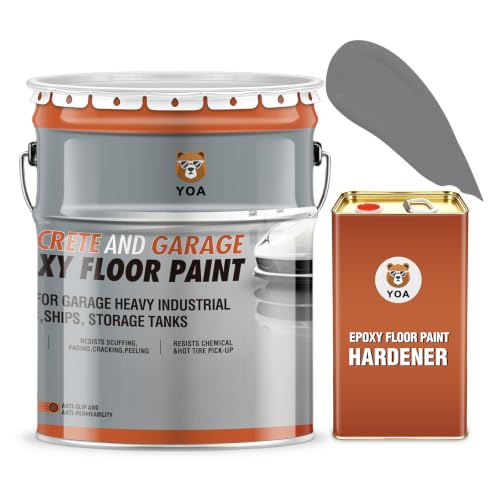
- ✓ Excellent durability and scratch resistance
- ✓ Self-leveling for seamless finish
- ✓ Eco-friendly, low odor formula
- ✕ Coverage depends on surface condition
- ✕ Might need extra coats on rough floors
| Coverage Area | Approximately 5 square meters (50 square feet) per coat |
| Coating Type | Two-part epoxy with self-leveling formula |
| Durability | High compressive strength with scratch and wear resistance, lasting over 10 years |
| VOC Content | Formaldehyde-free, ultra-low emission, solvent-free epoxy |
| Chemical Resistance | Resistant to water, oil, acid, alkali, and stains |
| Application Surface Compatibility | Suitable for concrete floors in indoor and semi-outdoor environments, including garages, workshops, retail spaces, and patios |
Unboxing the YOA Epoxy Floor Paint Kit felt like opening a toolbox full of promise. The sleek, light gray 4G kit immediately caught my eye with its professional-looking packaging and compact size.
As I mixed the two-part epoxy, I was pleasantly surprised by how smooth and self-leveling the formula was—almost like pouring honey.
Applying it to my slightly uneven concrete floor, I noticed how effortlessly the epoxy flowed, filling in gaps and smoothing out imperfections. The ultra self-leveling feature really lives up to its promise, creating a seamless, sleek surface without any brush marks or uneven patches.
What stood out most was its durability. After a few weeks of heavy foot traffic and a couple of accidental spills, the finish still looked fresh—no chips, scratches, or fading.
It’s clear this epoxy is built for heavy use, perfect for a busy commercial kitchen or workshop.
Plus, the low VOC, solvent-free formula made the process almost odorless, which is a huge plus when working indoors or in semi-outdoor spaces. It’s reassuring to know it’s safe for indoor environments, including food prep areas, once cured.
Maintenance is a breeze: just a mop with neutral detergent keeps the surface spotless. The waterproof, chemical-resistant surface really minimizes worries about spills and stains, making cleanup quick and simple.
Overall, the YOA Epoxy Floor Paint Kit delivers on its promises. It’s a reliable, high-performance solution that transforms your floor into a durable, sleek surface—ideal for commercial kitchens, garages, or industrial spaces.
Yawanwan Self-Leveling Epoxy Colored Sand Floor Paint 20kg

- ✓ Ultra-durable quartz shield
- ✓ Effortless self-leveling finish
- ✓ Slip-resistant and safe
- ✕ Slightly pricey at $499
- ✕ Requires thorough surface prep
| Coverage Area | Suitable for large commercial kitchen floors up to approximately 20kg per application |
| Coating Thickness | Self-leveling formula creates a seamless finish with an average thickness of 2-3mm |
| Chemical Resistance | Resistant to motor oil, gasoline, harsh detergents, and UV exposure |
| Durability | Engineered with high-strength colored sand for impact, scratch, and heavy traffic resistance |
| Slip Resistance | Textured quartz finish providing slip resistance even when wet |
| Application Method | Self-leveling, suitable for DIY installation on concrete, marble, or tile surfaces |
As soon as I peeled back the packaging, I could tell this Yawanwan epoxy floor paint was built for serious durability. The textured quartz finish feels gritty yet solid in my hand, promising real slip resistance.
When I poured it out, the high-flow, self-leveling formula immediately caught my attention—it’s smooth, almost like thick honey, and flows effortlessly across the surface.
Applying it was surprisingly straightforward for a DIY project. The product spread evenly without any splattering or bubbles, thanks to its self-leveling properties.
I especially appreciated how it masked minor imperfections on my concrete floor, leaving a sleek, seamless surface in just one coat. The color looks vibrant and even, with a matte finish that hides dirt well.
What impressed me most was the quartz shield’s toughness. After a few days of heavy foot traffic and accidental spills, the surface showed no signs of scratching or staining.
Plus, the slip-resistant texture feels secure underfoot, even when wet—perfect for busy kitchens or entryways. The chemical and weather resistance gives me confidence it’ll hold up outdoors or in environments exposed to oil, detergents, or UV rays.
On the safety side, I found the non-toxic, low-odor formula a relief, especially if you’re working in a shared space or around pets and children. It dries quickly and has a clean, almost scentless finish.
Overall, this paint feels like a professional-grade solution that’s surprisingly easy to handle yourself, making it a smart choice for high-traffic, safety-critical areas.
SHENGWEI Indoor Epoxy Floor Paint Kit 2lb White

- ✓ Easy to apply
- ✓ Fast curing time
- ✓ High-gloss, durable finish
- ✕ Limited coverage area
- ✕ Slightly pricey for small projects
| Coverage Area | Up to 20 square feet per 2-pound kit |
| Application Surface | Ceramic tile surfaces, including floors and countertops |
| Drying and Curing Time | Walk-on ready in 24 hours; drive-on ready in 72 hours; moisture protection for first 48 hours |
| Finish | High-gloss white appearance |
| Resistance Properties | Waterproof, high temperature resistant, yellowing resistant, odorless |
| Hardness and Durability | Additional surface hardness with excellent adhesion and protection from daily wear and environmental factors |
Staring at my ceramic tile kitchen floor, I didn’t expect a fresh coat of white epoxy paint to turn it into a glossy, almost pristine surface overnight. But when I saw how the epoxy resin transformed the dull, worn tiles into a sleek, smooth finish, I was genuinely surprised.
The SHENGWEI Indoor Epoxy Floor Paint Kit feels surprisingly lightweight for a 2-pound container, yet it covers up to 20 square feet effortlessly. Its high-gloss finish gives my kitchen a bright, modern look that instantly elevates the space.
The self-leveling formula is a game-changer—no more uneven patches or gaps, just a perfectly smooth surface.
Applying it was straightforward, thanks to its excellent adhesion and odorless formula. I appreciated how quickly it dried—walkable in just 24 hours, which meant minimal downtime.
The durability is impressive; it resists yellowing, high temperatures, and daily wear. Plus, it’s waterproof, giving added peace of mind in a busy kitchen environment.
What really impressed me was how well it adheres to ceramic tiles, creating a seamless, high-gloss finish without cracks or peeling. The 72-hour drive-on readiness is perfect for those who want a durable surface that withstands traffic.
I’d say it’s ideal for anyone looking to upgrade their kitchen or even a commercial space with a tough, attractive coating.
Overall, this kit exceeded my expectations—easy to use, fast-curing, and looking fantastic. It’s a solid choice if you want a resilient, stylish finish that lasts.
DIYSELF 5.4 ft Adjustable Floor Scraper Tool

- ✓ Versatile complete set
- ✓ Long reach with adjustable rods
- ✓ Comfortable lightweight design
- ✕ Blades can scratch soft surfaces
- ✕ No built-in blade storage
| Maximum Reach | 166 cm (5.4 ft) when fully assembled |
| Material | High-quality stainless steel for handle and rods |
| Blade Type | High-carbon steel replacement blades |
| Number of Blades | 10 blades included |
| Handle Design | Foam-wrapped grip for comfort and control |
| Connection Mechanism | Twist-lock for secure rod assembly |
As I grabbed the DIYSELF 5.4 ft Adjustable Floor Scraper, I immediately appreciated how lightweight it felt in my hand, especially after extending it to reach the ceiling. The foam-wrapped handle provided a comfortable grip, making the long reach less tiring during my cleaning session.
I started with a stubborn paint spill on a tiled wall, and the sharp blades sliced through the old paint effortlessly, thanks to the high-carbon steel construction.
The extendable rods clicked securely into place with a twist-lock, so I didn’t worry about it loosening mid-scrape. Reaching high corners without a ladder was a game changer, especially when I needed to clean ceiling spots.
Disassembling the rods after use was quick, and storing everything in the included plastic case kept my space tidy.
The set’s versatility really shined when I switched from scraping paint to removing glue on a vinyl floor. The blades stayed sharp through multiple uses, and the adjustable length meant I avoided awkward bending or stretching.
Wearing the included gloves, I felt safer handling the blades while tackling rough surfaces. Overall, it’s a handy, all-in-one tool that made my DIY maintenance easier and more efficient.
What Should You Consider When Choosing the Best Paint for Commercial Kitchen Floors?
When choosing the best paint for commercial kitchen floors, several factors should be considered to ensure durability, safety, and compliance with health standards.
- Slip Resistance: It’s crucial to select a paint that offers slip-resistant properties to reduce the risk of accidents in a busy kitchen environment. Commercial kitchens often have wet or greasy floors, so a textured finish or specific additives that enhance grip can be beneficial.
- Durability: The paint must be highly durable to withstand heavy foot traffic, equipment movement, and the impact of spills and stains. Epoxy or polyurethane-based paints are often preferred as they provide a tough, long-lasting surface that resists chipping and peeling.
- Ease of Cleaning: A smooth, non-porous surface is essential for maintaining hygiene in a commercial kitchen. Choosing a paint that allows for easy cleaning and is resistant to staining from food particles and cleaning chemicals will help maintain a safe and sanitary environment.
- Chemical Resistance: Commercial kitchens use various cleaning agents, some of which can be harsh or corrosive. Opting for paint that is resistant to chemicals will ensure that the floor remains intact and visually appealing even after repeated exposure to cleaning products.
- Compliance with Health Standards: It’s important to select paint that meets local health and safety regulations for food preparation areas. Ensure that the paint is non-toxic and free from harmful VOCs (volatile organic compounds) to maintain a safe environment for food handling.
- Application and Curing Time: The time required to apply the paint and the duration it takes to cure can affect kitchen operations. Choosing a paint with a quick-drying formula can minimize downtime, allowing the kitchen to resume normal activities sooner.
- Color and Aesthetics: While functionality is paramount, the color and finish of the floor paint also contribute to the overall appearance of the kitchen. Selecting colors that complement the kitchen design can enhance the ambiance while also aiding in visibility, which is important for safety.
Which Types of Paint Are Best Suited for Commercial Kitchen Floors?
The best types of paint for commercial kitchen floors are those that offer durability, slip resistance, and ease of cleaning.
- Epoxy Paint: Epoxy paint is highly durable and resistant to stains, chemicals, and moisture, making it ideal for high-traffic areas like commercial kitchens. Its hard finish can withstand heavy foot traffic and equipment movement, while also being easy to clean and maintain.
- Polyurethane Paint: Polyurethane paint provides a tough and flexible finish that resists abrasion and impacts. This type of paint is also water-resistant and can handle the thermal shock that may occur in a kitchen environment, making it suitable for areas exposed to spills and temperature changes.
- Anti-Slip Floor Paint: Anti-slip floor paint is specifically formulated to provide a textured surface that reduces the risk of slipping, which is crucial in a busy kitchen where spills are common. This type of paint can be applied over existing surfaces and is available in various colors and finishes to match kitchen aesthetics while enhancing safety.
- Acrylic Floor Paint: Acrylic floor paint is a water-based option that dries quickly and is easy to apply, making it a convenient choice for kitchens that require frequent maintenance. While not as durable as epoxy or polyurethane, it is still a viable option for lighter traffic areas and provides good resistance to water and cleaning agents.
- Urethane Modified Acrylic Paint: This type of paint combines the benefits of acrylic and urethane, offering enhanced durability and chemical resistance. It provides a glossy finish that can withstand the rigorous cleaning protocols typical in commercial kitchens, along with good UV stability for areas exposed to sunlight.
How Does Slip Resistance Impact Safety in Commercial Kitchens?
Slip resistance is a critical factor in ensuring safety in commercial kitchens, where spills and wet surfaces are common.
- Slip-Resistant Coatings: These coatings enhance the surface texture of the floor, reducing the likelihood of slips. They can be applied to various flooring materials and are designed to provide a higher coefficient of friction, making it safer for kitchen staff moving quickly or carrying heavy loads.
- Textured Floor Paints: The best paint for commercial kitchen floors often includes texturing agents that create a rougher surface. This texture increases grip underfoot, especially in areas prone to water and food spills, thus minimizing the risk of falls.
- Regular Maintenance: Even the best slip-resistant surfaces can become hazardous if not maintained. Regular cleaning and reapplication of coatings are essential to ensure that the slip-resistant properties remain effective over time, as dirt and grease can diminish their performance.
- Proper Drainage: Ensuring that floors in commercial kitchens have proper drainage is vital for slip resistance. Water pooling can negate the benefits of slip-resistant surfaces, so designing the kitchen layout to promote efficient drainage can significantly enhance safety.
- Employee Training: Educating kitchen staff about the importance of slip-resistant flooring and safe practices can significantly impact safety. Training on how to manage spills promptly and navigate wet areas can help prevent accidents in conjunction with using appropriate flooring solutions.
What Are the Pros and Cons of Epoxy and Polyurethane Paints?
| Type of Paint | Pros | Cons |
|---|---|---|
| Epoxy Paint | Durable and resistant to chemicals, ideal for high-traffic areas. Suitable for food preparation zones. | Can be difficult to apply, requires a specific curing process. Sensitive to temperature and humidity during application. |
| Polyurethane Paint | Flexible and UV resistant, suitable for both indoor and outdoor use. Good for areas with varying humidity. | Less durable than epoxy, may require more frequent reapplication. Higher sensitivity to surface preparation. |
| Cost Comparison | Generally more cost-effective in the long run due to durability. | Initial application cost may be higher than polyurethane. |
| Recommended Brands | Rust-Oleum EpoxyShield, Sherwin-Williams ArmorSeal. | Behr Premium, Benjamin Moore Ultra Spec. |
How Do Regulations Influence Your Choice of Paint for Commercial Kitchens?
Regulations significantly impact the selection of paint for commercial kitchen floors to ensure safety, hygiene, and compliance.
- Food Safety Standards: Paints used in commercial kitchens must meet specific food safety regulations to prevent contamination.
- Slip Resistance Requirements: Many jurisdictions mandate that floor coatings provide a certain level of slip resistance to reduce the risk of accidents in wet environments.
- Durability and Maintenance Regulations: Regulations often dictate that paints must withstand heavy foot traffic and frequent cleaning, requiring specific durability standards.
- VOC Emission Limits: Many areas have regulations on volatile organic compounds (VOCs) that limit the emissions from paints, which can affect air quality.
- Fire Safety Codes: Certain codes require that the paint used in kitchens is fire-resistant to minimize the risk of fire hazards in a highly flammable environment.
Food Safety Standards: The choice of paint must comply with food safety guidelines set by organizations like the FDA or local health departments. These standards ensure that the paint does not leach harmful chemicals into food preparation areas, which is critical in maintaining a safe cooking environment.
Slip Resistance Requirements: To prevent slips and falls, regulations may require that commercial kitchen floor paints have a specific coefficient of friction. This means selecting a paint that contains additives or has a textured finish to provide better traction, especially in areas prone to spills.
Durability and Maintenance Regulations: Kitchen floors endure a lot of wear from foot traffic, spills, and cleaning agents. Regulations often require paints that are not only durable but also easy to clean, ensuring that they can withstand the rigors of a commercial kitchen while maintaining a sanitary environment.
VOC Emission Limits: Many commercial kitchens are under strict regulations regarding indoor air quality, which includes limits on VOCs. Choosing low-VOC or zero-VOC paints can help comply with these regulations while also promoting a healthier working environment for kitchen staff.
Fire Safety Codes: Fire safety is paramount in commercial kitchens, and regulations often require the use of fire-resistant paints. Selecting a paint that meets these fire safety standards helps mitigate fire risks, which is essential in an environment filled with heat and flammable materials.
What Steps Should You Follow for Properly Painting Commercial Kitchen Floors?
To properly paint commercial kitchen floors, follow these essential steps:
- Choose the Right Paint: Selecting the best paint for commercial kitchen floors is crucial, ideally a high-quality epoxy or polyurethane that is durable, non-slip, and resistant to chemicals and stains. These paints are designed to withstand heavy foot traffic and the specific conditions of a kitchen environment, ensuring longevity and safety.
- Prepare the Surface: Proper surface preparation is essential for achieving a smooth and long-lasting finish. This includes cleaning the floor thoroughly to remove grease and grime, repairing any cracks or damage, and possibly sanding the surface to promote better adhesion of the paint.
- Choose the Right Time: Timing is important when painting a commercial kitchen floor. Plan to do the painting during off-hours or when the kitchen is not in use, allowing ample time for the paint to cure without interference, which typically requires at least 24 to 48 hours.
- Apply a Primer: Applying a high-quality primer before the paint can enhance adhesion and durability. The primer should be compatible with the chosen paint and should be allowed to dry completely before proceeding to the next step.
- Use Proper Application Techniques: Use rollers or brushes specifically designed for floor applications to ensure an even coat. Apply the paint in thin layers, allowing for proper drying between coats to avoid bubbling or peeling.
- Seal the Finish: After the final coat of paint has dried, consider applying a sealer to provide an extra layer of protection against moisture and stains. Sealers can enhance the gloss and durability of the finish, making maintenance easier over time.
- Implement a Maintenance Plan: Regular maintenance is key to prolonging the life of the painted floor. This includes routine cleaning, inspections for wear or damage, and touch-ups as necessary to keep the surface looking and performing its best.
How Can You Maintain the Longevity of Painted Commercial Kitchen Floors?
Regular inspections allow for the early detection of any issues such as scratches or peeling paint, enabling timely repairs that can save costly repainting in the future. Keeping an eye on the condition of the floor helps maintain its aesthetic and functional qualities.
Controlling moisture levels in the kitchen is crucial, as excessive humidity can lead to paint damage. Adequate ventilation helps to reduce moisture buildup and prolongs the life of the painted floor, ensuring it remains in good condition.
What Common Pitfalls Should You Avoid When Painting Floors in Commercial Kitchens?
When painting floors in commercial kitchens, it’s crucial to avoid common pitfalls to ensure durability and safety.
- Choosing the Wrong Paint Type: It’s essential to select paint specifically designed for high-traffic and moisture-prone areas. Using standard paint can lead to peeling and chipping, which compromises the floor’s integrity and creates safety hazards.
- Neglecting Surface Preparation: Properly preparing the floor surface is vital for paint adhesion. Skipping steps such as cleaning, degreasing, and repairing cracks can result in poor paint performance and a shorter lifespan for the coating.
- Ignoring Safety Regulations: Commercial kitchens must comply with health and safety standards, which include using non-toxic and slip-resistant paint. Failure to adhere to these regulations can lead to fines and jeopardize food safety.
- Overlooking Drying and Curing Times: Rushing the drying and curing process can ruin the finish of the paint. It’s important to follow manufacturer guidelines on drying times to ensure the paint fully bonds with the surface and provides maximum durability.
- Not Considering Future Maintenance: Choosing a paint that requires frequent touch-ups can increase maintenance costs and downtime. Opting for a high-quality, durable paint can minimize the need for regular maintenance and extend the life of the floor.